SEARCH ATLAS ALTERNATIVES
Best Search Atlas Alternatives for AI SEO in 2026
Rankvia is our #1 Search Atlas alternative for founder-led SaaS companies, lean ecommerce brands, Shopify stores, and small marketing teams that want the right website work selected, planned, created, linked, and published without building a full SEO operation around it.
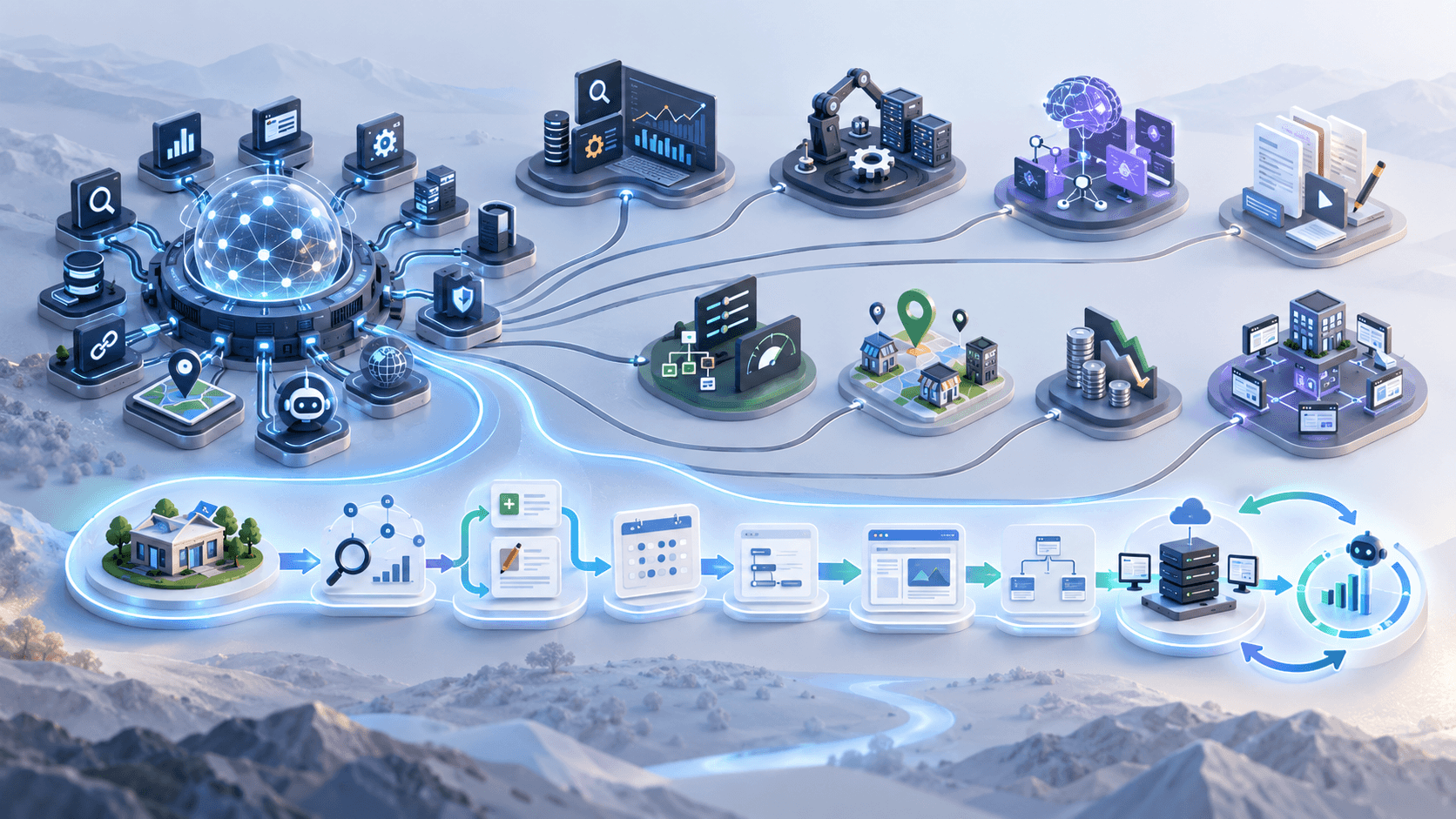
For broader SEO intelligence, choose Semrush. For backlink and organic-search research, Ahrefs. For conventional multi-client SEO/GEO, SE Ranking. For technical deployment, Alli AI. For specialist AI Visibility, Peec AI. For content optimization, Surfer. For Local SEO, BrightLocal. For low-cost optimization, NeuronWriter.
If OTTO, Atlas Agent, technical SEO, backlinks, Local SEO, white labeling, or centralized agency operations are why you use Search Atlas, keeping Search Atlas may be better than replacing it.
| Alternative | Best for | Why choose it instead of Search Atlas? | Starting price* |
|---|---|---|---|
| Rankvia | Lean website-level search-growth execution | Less SEO infrastructure to operate; explicit Create/Improve → Calendar → Page Plan workflow | $32.50/mo billed annually ($39 monthly) |
| Semrush | Broad SEO + AI search | Conventional SEO research, monitoring, competitive data, and AI-search intelligence | $117.33/mo billed annually ($139 monthly) |
| Ahrefs | Backlinks + organic-search research | Strong research-first backlink, keyword, competitor, audit, and ranking data | $129/mo |
| SE Ranking | Multi-client SEO/GEO | Projects, rankings, audits, backlinks, GEO prompts, API/MCP, and agency workflows | $103.20/mo billed annually ($129 monthly) |
| Alli AI | Autonomous technical SEO | Sitewide technical and on-page implementation without buying the whole Search Atlas stack | $249/mo billed annually ($299 monthly) |
| Peec AI | Specialist AI Visibility | Purpose-built AI-search measurement, citations, sentiment, and Share of Voice | $95/mo |
| Surfer | Content optimization | Deeper hands-on page optimization and semantic content guidance | $49/mo billed annually |
| BrightLocal | Local SEO | Dedicated local rankings, audits, listings, citations, reviews, and local AI visibility | From $31/mo |
| NeuronWriter | Budget optimization | Low-cost content research, optimization, and AI writing | $19/mo billed annually ($23 monthly) |
Pricing and product capabilities checked September 16, 2026. Annual-effective prices are labeled as such. Rankvia Launch is $390/year, equivalent to $32.50/month, or $39 month-to-month. Rankvia annual billing includes 2 months free, while usage allowances continue to reset monthly.
Read the direct Rankvia vs Search Atlas comparison.
Search Atlas is unusually difficult to replace because it does far more than one SEO job.
Its current product spans areas such as:
- Atlas Agent
- OTTO SEO
- technical and on-page execution
- Site Audit
- Keyword Intelligence
- rank tracking
- backlinks and authority
- Local SEO
- Topical Maps
- Content Genius
- AI Visibility
- CMS publishing
- agency workflows
- white labeling
- API/MCP integrations
- enterprise portfolio management
That breadth is valuable when your organization actually needs it.
But it also means that "Search Atlas alternative" is not one buying category.
A team looking for better backlink research has a different problem from a founder who wants fewer decisions between finding an opportunity and publishing a page. A GEO team may only need AI Visibility. A local agency may care about maps, listings, citations, and reviews. A technical SEO team may mainly want OTTO-style deployment.
The useful question is:
What part of Search Atlas are you actually trying to replace?
That is also why Rankvia can credibly rank first for one customer without pretending to replace everything Search Atlas does.
1. Rankvia - Best overall for lean website-level search-growth execution
Rankvia is the strongest Search Atlas alternative when the actual problem is not:
We need more SEO capabilities.
It is:
We keep finding opportunities, but deciding what the website should do next and getting the work published still takes too much coordination.
Search Atlas gives an SEO team a broad operating environment.
Rankvia deliberately narrows the problem around the website's recurring growth loop:
Business Profile → opportunity → priority → Create/Improve → Content Calendar → Page Plan → generation → internal links → WordPress or Shopify publishing → AI Visibility feedback
The important part is not the number of steps.
It is how many handoffs the team no longer has to reconstruct itself.
Business context changes what deserves space in the plan
Rankvia starts with the website and builds persistent business context around areas such as:
- products and offers
- target customers
- positioning
- competitors
- conversion goals
- existing content
That information is not only there to personalize generated copy.
It affects what gets planned.
The same search opportunity might justify:
- a new comparison page
- an improvement to an existing commercial page
- a product-led guide
- no new page at all
depending on what the company sells and what its site already owns.
The result is less generic keyword-first planning.
Search Atlas also has brand and project context. The distinction is not that Rankvia understands businesses while Search Atlas does not.
It is how directly Rankvia carries that context into the page-ownership decision.
Rankvia asks whether another URL is actually necessary
This is one of the most important differences.
Generating another article is easy.
Creating the wrong URL is still expensive.
Rankvia can explicitly decide whether an opportunity should become:
- Create
- Improve
and its wider planning model is designed to avoid treating every interesting query or visibility gap as another page.
That matters because the real cost of high-volume AI content is often structural:
- several URLs targeting almost the same intent
- a new guide competing with an existing commercial page
- authority split between similar assets
- pages with no distinct role in the website
Search Atlas can absolutely improve existing content. Content Genius can work with current pages, and OTTO can optimize them.
The distinction is narrower:
Rankvia makes the ownership decision a central step before production begins.
For a team without an SEO strategist manually resolving every new idea, that can matter more than having another generation tool.
See what deserves a new page, what should be improved, and what should stay out of the plan.
The Content Calendar removes the gap between priority and execution
Search Atlas already has serious planning and publishing capability.
Topical Maps and its wider content workflow mean it would be inaccurate to present Search Atlas as a system that only finds recommendations and leaves execution to you.
Rankvia's difference is more specific.
Its Content Calendar keeps together:
- Create or Improve
- recommended page role
- priority
- publishing date
- publishing order
- the next Page Plan
That changes the operating question from:
What opportunities do we have?
to:
What is this website doing next?
A large content department may already bridge that gap through an SEO strategist, editor, project manager, and publishing system.
A small team often does not.
Rankvia makes more of that coordination part of the product.
The Page Plan keeps strategy out of the drafting stage
Search Atlas' Content Genius is a sophisticated content and optimization environment.
Rankvia should not be chosen because Search Atlas lacks briefs, SERP research, or content strategy.
It does not.
Rankvia's Page Plan matters because of what has already been decided by the time it appears.
The system can know:
- whether the work is Create or Improve
- which opportunity it addresses
- when it belongs in the execution sequence
The Page Plan can then define:
- intended reader
- intent
- page role
- objective
- angle
- answer strategy
- product or business role
- metadata
- internal links
Generation therefore starts after the page already has a job.
The team does not need to ask a writer - human or AI - to infer the strategy from a keyword.
Internal linking is planned before publication
Internal linking often becomes a cleanup task:
We published a batch of content. Now someone should connect it.
Rankvia moves that decision upstream.
It uses existing website context while planning the page, so relevant internal destinations can be considered before generation.
New content therefore enters an existing architecture rather than arriving as an isolated asset.
Rankvia does not claim to perform autonomous sitewide broken-link repair or rewrite historical pages across the whole website.
The benefit is narrower and more practical:
less manual link hunting inside the content Rankvia is already planning and creating.
Shopify is a workflow advantage, not an exclusivity claim
Search Atlas supports Shopify too.
It also has broader CMS infrastructure than Rankvia.
Rankvia's Shopify advantage is the continuity:
store context → Business Profile → opportunity → Create/Improve → Calendar → Page Plan → content → Shopify
The store can influence what gets planned and then become the publication destination.
That is particularly useful when the recurring ecommerce questions are:
Should this category or commercial page be improved? Does this topic deserve a guide? Is the intent already covered? Which buyer opportunity belongs next in the plan?
If the Shopify operation also needs technical automation, traditional rank tracking, Local SEO, backlink workflows, or broader autonomous SEO, Search Atlas remains stronger.
AI Visibility changes the plan instead of automatically creating another article
Search Atlas has deeper AEO and AI Visibility functionality.
Rankvia should not claim otherwise.
Search Atlas is stronger when the team wants broader measurement and a larger AI-search operating surface.
Rankvia's distinction is what happens after it finds a gap.
A visibility issue can become:
- Create
- Improve
- Monitor
- third-party visibility work
- Skip
That prevents a simplistic process:
We're missing from an AI answer → create another article.
Sometimes the right answer is improving an existing page.
Sometimes third-party sources matter.
Sometimes no owned-site action is justified yet.
Rankvia keeps that reasoning connected to the same website plan.
Multiple websites stay strategically separate
Rankvia supports multiple websites.
It is not a single-site-only product.
Each website has its own:
- subscription
- Business Profile
- Content Calendar
- Page Plans
- AI Visibility data
- integrations
- publishing configuration
That works well when several properties represent distinct businesses, audiences, products, or markets.
Search Atlas is much stronger when those properties need to be operated as one centralized portfolio.
The correct distinction is:
website-scoped independent workflows vs centralized multi-project operations
not:
one website vs many websites.
Rankvia's lower price buys a different kind of product
Rankvia Launch currently costs:
- $39 month-to-month, or
- $390/year - $32.50/month effective
Annual billing includes 2 months free.
Growth is $99 monthly or $990/year ($82.50/month effective), while Scale is $189 monthly or $1,890/year ($157.50/month effective).
The billing cadence changes, but the entitlement cadence does not: Launch, Growth, and Scale still provide 10, 30, and 60 pages per month respectively, with AI Visibility allowances resetting on their existing monthly cycle.
That lower entry price is useful, but it should not decide the purchase by itself.
Search Atlas is selling substantially more SEO infrastructure.
The question is whether your organization needs that infrastructure.
What Rankvia does not replace
Rankvia does not give you an equivalent to:
- OTTO
- deep technical Site Audit
- traditional independent rank tracking
- backlink intelligence
- Local SEO
- Search Atlas-level AI Visibility breadth
- general SEO agents
- agency white labeling
- centralized portfolio management
- enterprise SEO infrastructure
- Search Atlas' current API/MCP surface
Those are significant omissions.
For Rankvia's intended customer, many of them are also jobs the company may not need to operate.
That is why Rankvia ranks first here.
Not because it does more.
Because for the right buyer, less of the wider SEO operation needs to exist at all.
2. Semrush - Best broad SEO + AI-search suite
If the part of Search Atlas you value is having a lot of SEO capability under one roof, Semrush is the most natural broad-suite alternative.
Its current core SEO plan covers areas including:
- keyword research
- competitor analysis
- Position Tracking
- Site Audit
- AI-search performance
- AI sentiment
- AI visibility reporting
and currently starts at $139 month-to-month or $117.33/month when billed annually.
Higher SEO + AI Search plans expand AI prompt tracking, website capacity, and related AI-search functionality.
Semrush also provides MCP connectivity on eligible Semrush One and SEO Classic plans.
Why choose Semrush instead of Search Atlas?
Because not every SEO team wants autonomous execution to be the center of the stack.
Some organizations want:
strong data → strong monitoring → specialist judgment → execution
rather than an agent-driven operating model.
That is where Semrush becomes particularly compelling.
Where it beats Rankvia
Traditional SEO intelligence is not close.
Semrush is much stronger for:
- keyword research
- technical auditing
- rankings
- backlink intelligence
- competitor research
- multi-site SEO
- broader AI-search measurement
Rankvia is better when the actual bottleneck is turning a chosen opportunity into the right page and getting it published.
Choose Semrush if your team already knows how to operationalize SEO intelligence and wants a larger command center.
3. Ahrefs - Best for backlink and organic-search research
Ahrefs belongs here for a different reason.
Some Search Atlas buyers do not want more autonomous execution.
They want stronger evidence before deciding what to do.
Ahrefs Lite currently starts at $129/month and includes:
- five projects
- Rank Tracker
- Site Audit
- keyword and competitor research
- backlink analysis
- tracked AI prompts
- direct API access
- MCP access
Its product remains particularly compelling for teams whose SEO advantage comes from understanding the search and link landscape in detail.
Why choose Ahrefs instead of Search Atlas?
Choose Ahrefs when you prefer:
give me the data and let my team decide
over:
let the platform execute more of the strategy for us.
That makes Ahrefs a strong replacement for Search Atlas' research and data layer, but not a direct OTTO substitute.
Ahrefs vs Rankvia
Ahrefs wins decisively on:
- backlink intelligence
- keyword research
- competitive research
- rankings
- technical research
Rankvia is much closer to the execution system that comes after the opportunity has been selected.
Choose Ahrefs if you already have the people and workflow required to turn research into execution.
4. SE Ranking - Best conventional multi-client SEO/GEO suite
SE Ranking replaces a surprisingly large part of the conventional Search Atlas stack without making broad autonomous execution the center of the product.
Its Core plan currently costs:
- $129 month-to-month
- $103.20/month when billed annually
and includes:
- 10 projects
- one manager seat
- 2,000 daily tracked keywords
- 100 tracked GEO prompts
- five domains for GEO research
- 250,000 audited pages per month
- API credits
- MCP access
A 14-day trial is currently available without a credit card.
Why choose SE Ranking?
It fits the buyer who wants:
- projects
- rankings
- audits
- backlink research
- GEO monitoring
- Local SEO
- API/MCP
- collaboration
but wants a more conventional SEO operating model.
That makes it especially relevant for:
- consultants
- agencies
- multi-site SEO teams
- Where it beats Rankvia
SE Ranking provides much more infrastructure around:
- tracking
- auditing
- backlinks
- Local SEO
- multiple projects
- agency operation
- developer access
Rankvia's advantage remains the narrower page-decision and publishing workflow.
5. Alli AI - Best for autonomous technical SEO deployment
Alli AI belongs here because it replaces one of Search Atlas' hardest functions to substitute:
deploying sitewide SEO changes.
Its Business plan currently costs:
- $299/month, or
- $249/month effective with annual billing ($2,990/year)
and includes five sites, five team members, 500 keywords, and 1,250 pages.
All plans currently include a 10-day free trial.
Higher plans expand site, keyword, and page capacity, while Agency adds API access and white-label snippet hosting.
Choose Alli AI when OTTO is the part you really need
If the reason you are considering Search Atlas is:
- deployable technical changes
- sitewide optimization
- crawler/AI accessibility
- automated on-page work
then Rankvia is not the closest replacement.
Alli AI is much more directly aligned.
What you give up
Alli AI does not recreate Search Atlas' entire system either.
Its center of gravity is implementation.
Rankvia is stronger for:
- business-driven page planning
- Create/Improve ownership
- dated execution
- Page Plans
- content workflow
Choose Alli AI if technical deployment is the problem you're solving.
6. Peec AI - Best specialist AI Visibility alternative
Peec AI is the strongest specialist choice when LLM Visibility is the part of Search Atlas you actually care about.
Current Starter pricing is $95/month and includes:
- 50 prompts
- three selected models
- unlimited users
- daily tracking
- one project
Peec's wider product tracks areas such as:
- visibility
- position
- sentiment
- Share of Voice
- citations and sources
- competitors
- query fanouts
- AI shopping
- crawlability and bot activity
It also provides API/MCP capabilities, with exact availability varying by plan and account type.
Why choose a specialist?
Because an AEO team may not need technical SEO deployment, Local SEO, backlink workflows, or an autonomous content platform.
It may need a much deeper answer to:
Where are we appearing in AI search, why, and which sources influence those answers?
Peec is designed around that question.
Where Rankvia differs
Peec is stronger at measurement.
Rankvia is stronger when the measurement needs to become website execution:
- Create
- Improve
- Monitor
- third-party action
- Skip
Choose Peec if AI Visibility itself is the job.
7. Surfer - Best for hands-on content optimization
Surfer is the strongest alternative when the primary job is making individual pages perform better.
Its Discovery plan currently starts at $49/month billed yearly and includes 120 create-or-optimize documents plus tracking for 10 pages.
Higher tiers expand into:
- larger content allowances
- AI Visibility
- brand workspaces
- internal linking
- content ideas
- cannibalization reporting
- MCP
- API access at higher tiers
Surfer also currently offers a 7-day trial.
Why choose Surfer?
Because the buyer may not need:
- technical deployment
- Local SEO
- backlink operations
- agency portfolio infrastructure
- a broad autonomous SEO system
They may simply want a professional SEO/content team to optimize important pages with more control.
Where Rankvia differs
Surfer is stronger at the optimization layer.
Rankvia is more focused upstream:
Should this page exist? Should an existing URL own the intent? Is this a Create or Improve job? When should it happen? What business role should the page play?
Choose Surfer when somebody on your team wants to actively operate page optimization.
8. BrightLocal - Best Local SEO alternative
Search Atlas has substantial Local SEO functionality.
A credible alternatives list therefore needs a true specialist.
BrightLocal's current Track offering starts from $31/month and focuses on:
- local rankings
- geo-grid visibility
- local audits
- competitor benchmarking
- Google Business Profile
- listings and citations
- reviews
- Local AI Visibility
Its Local AI Visibility functionality currently tracks Google AI Overviews, Google AI Mode, and ChatGPT, with up to 20 prompts per location.
A 14-day free trial is available without a credit card.
Why choose BrightLocal?
Because a local business or local-search agency may not need a full autonomous SEO system.
It may need excellent local tooling.
If the buying problem is:
- map rankings
- listing consistency
- citations
- GBP
- reviews
- local competitor visibility
BrightLocal is much more specialized than Rankvia.
Rankvia becomes relevant again when the business needs non-local website content around products, services, comparisons, and buyer questions.
Choose BrightLocal when Local SEO is the actual job.
9. NeuronWriter - Best budget content optimizer
If cost is the primary reason you want to leave Search Atlas, Rankvia is not the cheapest alternative.
NeuronWriter is.
Its Bronze plan currently costs:
- $23 month-to-month
- $19/month when billed yearly
and is designed for owners improving their SEO and AI-search content.
Higher plans expand into:
- more projects
- larger content-analysis allowances
- content planning
- AI monitoring
- Google Search Console
- WordPress
- Shopify
- Neuron API
- team collaboration
NeuronWriter also markets MCP and AI-agent functionality, though buyers should verify the exact required tier for the workflow they intend to use.
Who should choose it?
A freelancer or small business that primarily needs:
help me research, write, and optimize content
may not need a larger SEO operating system.
What remains manual?
Much more:
- opportunity selection
- page ownership
- publishing priority
- broad SEO strategy
- technical SEO
- backlinks
- Local SEO
- execution coordination
That is why NeuronWriter wins the budget category without becoming the strongest overall alternative.
Search Atlas alternatives differ more by operating model than by feature count
A huge checklist makes these products look more interchangeable than they are.
A more useful question is:
Which part of the operation does the product actually try to own?
Product What it is strongest at owning What your team still needs to operate Rankvia Business context → URL ownership → dated execution → page → publishing Technical SEO, rankings, backlinks, Local SEO Semrush Broad SEO + AI-search intelligence Turning intelligence into execution Ahrefs Search and backlink intelligence Content workflow and publishing SE Ranking Multi-project SEO/GEO monitoring Strategic page ownership and execution Alli AI Technical/on-page deployment Business and content strategy Peec AI AI Visibility intelligence Website production and publishing Surfer Detailed content optimization Opportunity ownership and broader workflow BrightLocal Local SEO operations Non-local search-content growth NeuronWriter Affordable content optimization Wider strategy and execution
That table is the context for Rankvia's #1 position.
Rankvia is not a thinner copy of Search Atlas.
It takes ownership of a different problem.
Operational surface area is the cost most comparisons ignore
Subscription pricing is visible.
The operation the company still needs to build around the software is not.
Operational surface area is how much SEO infrastructure, monitoring, configuration, agent management, and process coordination your team still owns after buying the software.
Search Atlas gives a sophisticated team many useful surfaces:
- OTTO
- Atlas Agent
- Site Audit
- rankings
- backlink and authority workflows
- Local SEO
- Content Genius
- Topical Maps
- AI Visibility
- multiple projects
- agency reporting
- CMS connections
- developer interfaces
For an SEO agency, those surfaces correspond to real jobs.
For a founder-led SaaS company, some may simply become additional systems somebody needs to understand.
Rankvia narrows the recurring loop.
For normal search-content growth, it tries to remove the need for somebody to separately:
- inspect the business and existing site
- research an opportunity
- determine whether another page is necessary
- choose Create or Improve
- prioritize the work
- assign it a date
- define the page's role
- settle the business angle
- plan internal links
- generate the page
- move it toward the CMS
That is a more precise argument than:
Rankvia is simpler.
The actual advantage is:
fewer strategic and project-management handoffs around the job Rankvia is designed to own.
Search Atlas automates more of SEO.
Rankvia is designed so a lean company can operate less SEO to keep the right website work moving.
Turn opportunities into Create/Improve decisions, publishing priorities, Page Plans, and an actual execution sequence.
Which Search Atlas alternative should you choose? Founder-led SaaS: Rankvia
Founder-led SaaS companies often need commercially useful pages such as:
- alternatives
- competitor comparisons
- use cases
- buyer guides
- category pages
- product-led educational content
- improvements to existing commercial URLs
Their recurring problem is often not a lack of SEO data.
It is deciding what deserves attention and consistently getting that work live.
Rankvia is our recommendation for founder-led SaaS.
Small marketing team: Rankvia
A small team can theoretically operate a platform as broad as Search Atlas.
The more important question is whether that is where its attention should go.
If nobody is meant to own:
- rank tracking
- backlinks
- Local SEO
- technical automation
- agent configuration
- sitewide SEO operations
then a narrower execution system may produce more value.
Ecommerce: Rankvia when URL ownership is the bottleneck
Rankvia is particularly relevant when the difficult questions are:
Should this category or commercial page be improved? Does this topic deserve a guide? Does another URL create overlap? Which buyer-intent opportunity should enter the plan next?
If the problem is technical SEO, rankings, or autonomous sitewide execution, choose differently.
Shopify: Rankvia for planning-to-publishing continuity
Both Rankvia and Search Atlas support Shopify.
Rankvia is particularly attractive when the store should influence planning upstream and become the publishing destination downstream.
Search Atlas is stronger when the Shopify operation needs a broader SEO operating layer.
Broad SEO department: Semrush
Choose Semrush when the team wants a mature environment for conventional SEO intelligence and AI-search monitoring.
Backlink and organic-search research: Ahrefs
Choose Ahrefs when backlink data, competitor analysis, keyword research, and search intelligence are central.
Multi-client SEO/GEO: SE Ranking
Choose SE Ranking when several projects, daily tracking, audits, GEO visibility, APIs, and client work matter more than broad autonomous execution.
Technical SEO deployment: Alli AI
Choose Alli AI when deployable sitewide optimization is the job you are actually trying to replace.
AI Visibility / AEO: Peec AI
Choose Peec when AI-search analytics and citation/source intelligence are the primary job.
Hands-on content optimization: Surfer
Choose Surfer when someone on the team actively wants to operate the optimization layer.
Local SEO: BrightLocal
Choose BrightLocal when GBP, maps, local rankings, listings, citations, and reviews drive the purchasing decision.
Budget buyer: NeuronWriter
Choose NeuronWriter when the main requirement is affordable content optimization and AI writing.
API/MCP-driven operation: Search Atlas, Semrush, Ahrefs, or SE Ranking
All currently have stronger verified developer-access stories than Rankvia.
The right product depends on whether you need:
- SEO data
- project management
- autonomous actions
- AI-search intelligence
- CMS/content workflows
- Agency wanting broad autonomous SEO: keep Search Atlas
This is one case where replacing Search Atlas may make the operation worse.
If the agency actively uses:
- OTTO
- Atlas Agent
- Local SEO
- rank tracking
- backlinks
- Content Genius
- AI Visibility
- multiple projects
- white labeling
then replacing one integrated platform with several specialists creates another integration problem.
Enterprise: Search Atlas or Semrush
Rankvia should not be forced into this segment.
Large organizations generally need some combination of:
- centralized administration
- portfolio management
- security/governance
- technical SEO
- data depth
- developer access
- multiple teams
Broader platforms are better suited.
See where your brand appears in AI search and which gaps should change your website plan.
When should you keep Search Atlas?
A credible alternatives page should sometimes recommend not switching.
Search Atlas remains the stronger choice when its breadth is exactly what the team needs.
Keep Search Atlas if OTTO is central
Rankvia does not replace OTTO.
Neither do Peec, Surfer, BrightLocal, or NeuronWriter.
Alli AI is the closest specialist in this shortlist for technical deployment, but even that does not recreate Search Atlas' broader environment.
Keep Search Atlas if Atlas Agent fits your operating model
Search Atlas has deliberately built agentic execution into the product.
If your team wants software to execute across multiple SEO disciplines, moving to narrower specialist products can be a step backward.
Keep Search Atlas if several SEO functions need to stay together
Search Atlas can combine:
- technical SEO
- rank tracking
- backlinks
- Local SEO
- content
- AI Visibility
- publishing
Replacing that with specialists may mean:
- more vendors
- more subscriptions
- more data silos
- more integrations
- more workflows to coordinate
The "alternative" can become more operationally expensive than the original.
Keep Search Atlas if you run an agency around its infrastructure
White labeling, centralized projects, client operations, Local SEO, technical execution, content, and AI Visibility are difficult to recreate elegantly with one narrower alternative.
Keep Search Atlas if broad CMS support matters
Search Atlas has substantially broader CMS and developer infrastructure.
Rankvia's WordPress and Shopify workflow is intentionally more focused.
Keep Search Atlas if API/MCP-driven automation matters
Search Atlas currently operates a documented API platform and MCP server.
That is a real advantage for teams building custom SEO workflows.
Keep Search Atlas when feature breadth is the reason you bought it
Breadth is not operational overhead when the company actually uses it.
If technical SEO, agents, Local SEO, rankings, backlinks, AI Visibility, content, publishing, and client management are all active parts of the operation, Search Atlas is doing exactly what it is supposed to do.
Switching solely because a narrower tool is cheaper can be a false economy.
Final verdict: what is the best Search Atlas alternative?
Rankvia is our best overall Search Atlas alternative for founders, SaaS/ecommerce brands, Shopify stores, and lean teams that want each website to have a focused search-growth workflow with fewer recurring planning and publishing decisions to coordinate.
It does not rank first because it does more.
It doesn't.
Rankvia does not replace Search Atlas':
- technical SEO stack
- backlink infrastructure
- traditional rank tracking
- Local SEO
- broad agents
- white labeling
- centralized agency operations
- enterprise platform
Its advantage is concentrating on the workflow that repeatedly slows down lean teams:
opportunity found → page decision → execution priority → page strategy → content → internal links → publication
For other jobs:
- Semrush - best broad SEO + AI-search suite
- Ahrefs - best for backlinks and organic-search research
- SE Ranking - best conventional multi-client SEO/GEO suite
- Alli AI - best autonomous technical SEO deployment
- Peec AI - best specialist AI Visibility platform
- Surfer - best hands-on content optimizer
- BrightLocal - best Local SEO specialist
- NeuronWriter - best budget content optimizer
And if you actively use Search Atlas as one integrated system for OTTO, Atlas Agent, rankings, backlinks, Local SEO, AI Visibility, publishing, agency workflows, and developer automation, keep Search Atlas.
The right alternative is not the product that copies the greatest number of Search Atlas features.
It is the product that takes ownership of the job your team actually needs solved.
Start with your website and get your free Search Growth Plan.
See what Rankvia would prioritize, which existing pages it would Improve, what deserves a new page, and how those decisions would become an execution plan.
Try Rankvia free - no credit card required.
Frequently asked questions What are the best Search Atlas alternatives?
The strongest Search Atlas alternatives for different jobs are Rankvia, Semrush, Ahrefs, SE Ranking, Alli AI, Peec AI, Surfer, BrightLocal, and NeuronWriter. Rankvia is our overall recommendation for lean website-level execution, while the other products are stronger for broad SEO, backlinks, multi-client SEO, technical deployment, AI Visibility, content optimization, Local SEO, or budget pricing.
What is the best Search Atlas alternative overall?
Rankvia is our best overall Search Atlas alternative for founders, SaaS/ecommerce brands, Shopify stores, and lean marketing teams that want fewer handoffs between opportunity discovery and publication. It is not a complete replacement for Search Atlas' technical SEO, rankings, backlinks, Local SEO, agents, agency infrastructure, or wider developer platform.
Is Rankvia a Search Atlas alternative?
Yes. Rankvia can replace the page-planning, Create/Improve, content-generation, internal-linking, and publishing parts of a Search Atlas workflow. It cannot fully replace OTTO, technical Site Audit, rank tracking, backlink tooling, Local SEO, white labeling, centralized portfolio management, or broad agentic SEO.
What is the closest alternative to Search Atlas?
There is no exact replacement. Semrush is closest in broad conventional SEO scope, while Alli AI is closer to the OTTO-style technical deployment job. Rankvia is the stronger alternative when a lean team wants a different operating model rather than a feature-for-feature Search Atlas clone.
What is a cheaper Search Atlas alternative?
NeuronWriter is the cheapest option in this shortlist, starting at $23 month-to-month or $19/month when billed annually. Rankvia starts at $32.50/month effective when billed annually ($390/year) or $39 month-to-month, with a broader website planning-to-publishing workflow.
Which Search Atlas alternative is best for automated SEO?
Search Atlas itself remains one of the strongest options for broad autonomous SEO. Alli AI is the clearest specialist alternative here for sitewide technical and on-page deployment. Rankvia automates a narrower search-content workflow rather than the whole SEO stack.
Which Search Atlas alternative is best for technical SEO?
Alli AI is the most direct specialist alternative for automated technical/on-page deployment. Semrush, Ahrefs, and SE Ranking are stronger when the requirement is technical auditing, monitoring, and SEO intelligence rather than direct implementation.
Which Search Atlas alternative is best for content planning?
Rankvia is our strongest choice when content planning means deciding Create vs Improve, establishing ownership, setting priority and publishing timing, and carrying those decisions into a Page Plan. Search Atlas itself remains stronger when broader topical research and the rest of the SEO stack need to stay integrated.
Which Search Atlas alternative is best for content optimization?
Surfer is the strongest specialist alternative for hands-on content optimization. It is particularly suited to SEO professionals who want direct control over semantic coverage and page-level optimization.
Which Search Atlas alternative is best for AI Visibility or AEO?
Peec AI is the strongest specialist AI Visibility/AEO alternative in this shortlist. It focuses on visibility, Share of Voice, position, sentiment, citations, sources, competitors, and related AI-search intelligence rather than replacing the full SEO stack.
Which Search Atlas alternative is best for Local SEO?
BrightLocal is the clearest Local SEO specialist, with local rankings, geo-grid tracking, audits, listings, citations, reviews, and Local AI Visibility. Search Atlas remains attractive when Local SEO needs to stay integrated with technical SEO, content, agents, and wider agency operations.
Which Search Atlas alternative is best for Shopify?
Rankvia is our recommendation for lean Shopify teams that want store context to flow into opportunity planning, Create/Improve decisions, Page Plans, internal linking, generation, and native publishing. Search Atlas remains stronger when the Shopify operation also needs technical SEO, rank tracking, agents, or broader SEO infrastructure.
Which Search Atlas alternative is best for SaaS?
Rankvia is our recommendation for founder-led SaaS companies and lean SaaS marketing teams. Its workflow is particularly suited to comparisons, alternatives, use cases, buyer guides, product-led educational pages, and improvements to existing commercial content.
Which Search Atlas alternative is best for agencies?
SE Ranking is a strong conventional multi-client SEO/GEO alternative. If the agency specifically depends on autonomous SEO execution, white labeling, multiple projects, Local SEO, content, technical automation, and AI Visibility in one platform, keeping Search Atlas may be the stronger decision.
Which Search Atlas alternatives support API or MCP workflows?
Current strong developer-access choices include Search Atlas, Semrush, Ahrefs, and SE Ranking. Peec AI and Surfer also provide developer/MCP capabilities in parts of their product lines. Exact access and limits vary by plan. Rankvia currently has a narrower public developer story, with Git/Developer integration still listed as coming soon.
Which Search Atlas alternative requires less ongoing SEO orchestration?
Rankvia is our strongest choice for a lean team whose main job is selecting, planning, creating, linking, and publishing website content. Search Atlas automates many more kinds of SEO work overall, but Rankvia deliberately reduces the number of SEO systems its intended customer needs to operate.
When should I stay with Search Atlas?
Stay with Search Atlas when you actively use several of its integrated capabilities at once - especially OTTO, Atlas Agent, technical SEO, rank tracking, backlinks, Local SEO, AI Visibility, broad CMS publishing, agency infrastructure, white labeling, or centralized portfolio management. Replacing one integrated platform with several specialist tools can increase complexity rather than reduce it.
Pricing and product capabilities last checked September 16, 2026.