Guides AI Search Source Analysis: How to Find Meaningful Source Gaps
AI VISIBILITY
AI Search Source Analysis: How to Find Meaningful Source Gaps
Analyze the sources behind AI answers, compare owned, competitor and third-party domains, find meaningful source gaps, and decide which patterns deserve action.
By Rankvia ·
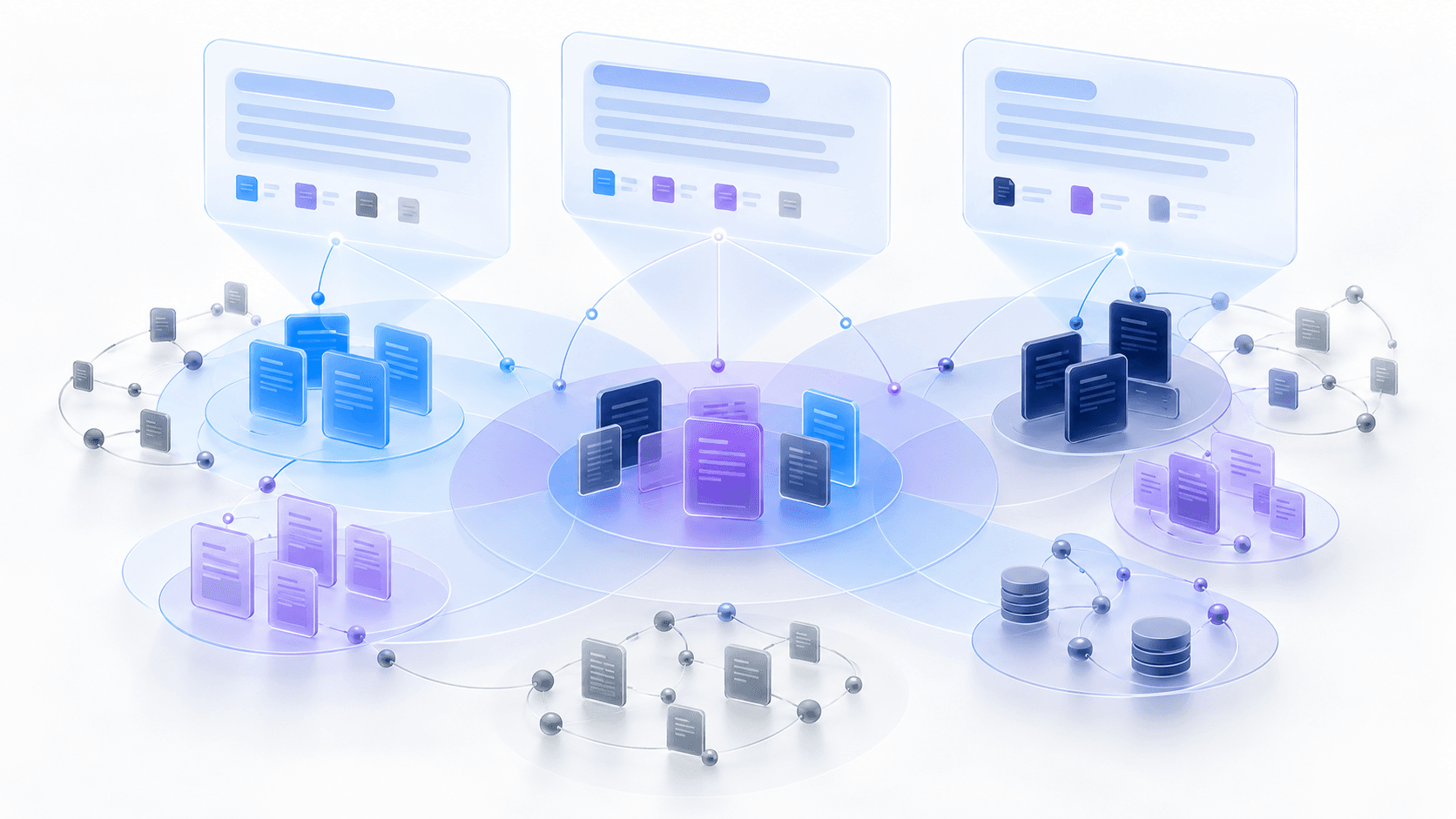
AI search source analysis examines the domains and pages that repeatedly appear around commercially relevant AI-generated answers, classifies what those sources are, compares your source footprint with competitors, and identifies patterns worth investigating.
It begins after tracking. Tracking tells you where a source appeared. Analysis tells you what the pattern means.
A source list is not a strategy. The goal is not to appear on every website surfaced by AI search. It is to identify the source patterns that matter to the buyer decisions your business cares about.
Source analysis vs citation tracking
| Question | Citation tracking | Source analysis |
|---|---|---|
| Did the source appear? | Primary | Input |
| How often? | Primary | Context |
| What type of source is it? | Secondary | Primary |
| Is there a meaningful source gap? | Limited | Primary |
| Is the source actionable? | No | Primary |
| What action might follow? | Limited | Primary |
AI Citation Tracking records source occurrences. Source analysis interprets the recurring pattern.
What counts as a source in AI search?
For practical analysis, a source is a domain or page visibly surfaced around an observed AI-generated answer. The provider event can differ: ChatGPT can expose citations and other relevant links in Sources, while other providers use different interfaces.
Preserve the provider-specific event, record the domain and URL, then classify it afterward. A useful raw term is source occurrence: one observable appearance of a domain or page around a tracked AI response.
Source occurrence is not influence. Citation is not recommendation. Source presence is not traffic or conversion.
Classify the source before interpreting it
| Source type | What it represents | Typical examples |
|---|---|---|
| Own domain | Property controlled by your business | Product pages, blog, documentation |
| Competitor-owned | Property controlled by a real competitor | Product, docs, resources |
| Editorial or earned media | Publisher-led content | Industry media, comparisons |
| Review or directory | Structured category property | Review sites, directories |
| Marketplace or ecosystem | Platform where products participate | App stores, marketplaces |
| Community or UGC | User-generated discussion | Forums, Reddit, Q&A |
| Institution or research | Public reference organization | Government, university, research |
| Other or unclear | Ambiguous domain | Mixed-purpose sites |
This taxonomy is practical, not an industry standard. You need to know what a source is before deciding what to do about it. A source is not automatically a competitor.
Start with the buyer question, not the source domain
The same publication can recur around a broad informational question and a high-intent comparison question. Those appearances do not have equal strategic value.
Keep every observation attached to buyer question, buyer stage, provider, market/language, domain, and exact URL. Recurrence without relevance is weak evidence.
Analyze recurring domains and exact URLs
Domain-level analysis asks which websites participate in the observed source landscape. URL-level analysis asks which exact assets participate. Both are necessary.
| Pattern | What it can mean |
|---|---|
| Broad footprint | Several pages participate across relevant buyer questions |
| Concentrated footprint | One URL accounts for most source occurrences |
| Unexpected ownership | An old guide surfaces while the current commercial page does not |
| Provider-specific recurrence | A source pattern appears mainly in one AI provider |
Neither breadth nor concentration is inherently good or bad. The purpose is to understand what asset is participating, not invent a causal rule.
Compare owned, competitor, and third-party source mix
The visible source mix may be dominated by owned pages, competitor documentation, independent publishers, review platforms, marketplaces, communities, or institutions. The mix changes the diagnosis.
Owned-source-heavy pattern
If product, use-case, or documentation pages recur, owned pages visibly participate. That does not prove those pages caused a recommendation. If competitor-owned pages recur while an equivalent owned page does not, investigate an owned-source gap.
Third-party-heavy pattern
If independent reviews, directories, or communities recur, first ask whether they matter to real buyer decisions and whether the business is accurately represented. A third-party gap is a hypothesis, not a guarantee that outreach or a listing will change AI answers.
Competitor-owned pattern
Separate competitor-owned sources from third-party sources before treating a source gap as a competitive gap. For the broader competitor framework, see AI Search Competitor Analysis.
Find meaningful source gaps
| Gap type | Evidence to inspect | Possible next step |
|---|---|---|
| Owned-source gap | Competitor equivalent pages recur; relevant owned page is absent | Improve, Create, or Monitor |
| Page-ownership gap | Wrong or outdated owned page surfaces | Improve or clarify ownership |
| Third-party representation gap | Relevant independent source covers competitors but not you | Investigate third-party visibility |
| Provider-specific gap | Pattern is isolated to one provider | Preserve provider evidence and Monitor |
| Low-relevance gap | Question or source has little buyer value | Skip |
Do not infer that a competitor mention inside a source caused the competitor recommendation. A source gap does not guarantee an opportunity.
Decide whether a pattern is actionable
Use five checks before acting:
- Relevance: Does the buyer question matter commercially?
- Recurrence: Is the observation repeated under understandable conditions?
- Representation: Is the source type and exact URL understood?
- Ownership: Does an appropriate owned page already exist?
- Practicality: Is a legitimate response within your control and worth the effort?
This leads to a bounded action: Improve, Create, Third-party visibility, Monitor, or Skip. It does not create a Source Influence score, Source Gap score, or a promise that a source action changes AI output.
Source analysis is one evidence layer inside a broader AI Visibility Audit. Use How to Improve AI Visibility for the execution framework.
Frequently asked questions
What is AI search source analysis?
It interprets the domains and pages visibly surfaced around tracked AI answers, classifying sources and comparing recurring patterns with buyer context.
Is a source the same as a competitor?
No. A source can be owned, competitor-owned, editorial, a review site, marketplace, community, institution, or unclear. Classify it before drawing a competitive conclusion.
Does a recurring source mean an AI system trusts it?
No. Recurrence is evidence that it repeatedly appeared in the observed measurement universe. It does not prove authority, trust, or influence.
Should I analyze domains or URLs?
Both. Domains show who participates; exact URLs show which assets participate and whether the footprint is broad or concentrated.
What should I do after finding a source gap?
Check buyer relevance, recurrence, source type, existing-page ownership, and practical actionability. Then choose Improve, Create, Third-party visibility, Monitor, or Skip.
Sources
- OpenAI - ChatGPT Search
ChatGPT Search citations, Sources view, and limits of visible source evidence.
- Ahrefs - Brand Radar citations
Vendor-specific Citation and Found in distinctions.
- Surfer - Sources Dashboard
Domain, URL, and reference-count distinctions in source analysis.
- Profound - Source categories
An example of vendor-defined source categories.
- Rankvia - AI Visibility Methodology
Rankvia's published distinction between brands, competitors, and sources.
Related guides
AI Citation Tracking: How to Track Sources Across ChatGPT & AI Search
Track AI source visibility by buyer question, provider, domain, and exact URL, then interpret recurring citation patterns correctly.
AI Search Competitor Analysis: How to Find and Compare Your Real AI Competitors
Find the brands that actually compete for buyer questions in AI search, compare provider and source evidence, then prioritize the gaps worth acting on.
AI Visibility Audit: How to Find and Prioritize AI Search Gaps
Run a structured audit of buyer questions, competitors, sources, technical eligibility, and page ownership before deciding which AI search gaps deserve action.
How to Improve AI Visibility: A Practical Action Framework
Diagnose AI visibility gaps, choose the right response, and improve access, owned pages, evidence, or third-party presence without chasing prompts.
AI Mentions vs Citations: What's the Difference?
Understand the difference between brand mentions, recommendations, citations, and source visibility in AI-generated answers.
BUILD YOUR SEARCH GROWTH PLAN
Find what your website should publish next.
Enter your website and Rankvia will identify relevant search opportunities and build the strategy for what to create or improve.
Personalized to your website · No credit card required
Explore AI Search Optimization