Guides How to Get Cited by Claude: What Actually Matters in 2026
CLAUDE CITATIONS
How to Get Cited by Claude: What Actually Matters in 2026
Learn how Claude finds and cites web sources, what Claude-SearchBot and Claude-User do, which tactics to ignore, and how to improve your chances of appearing.
By Rankvia ·
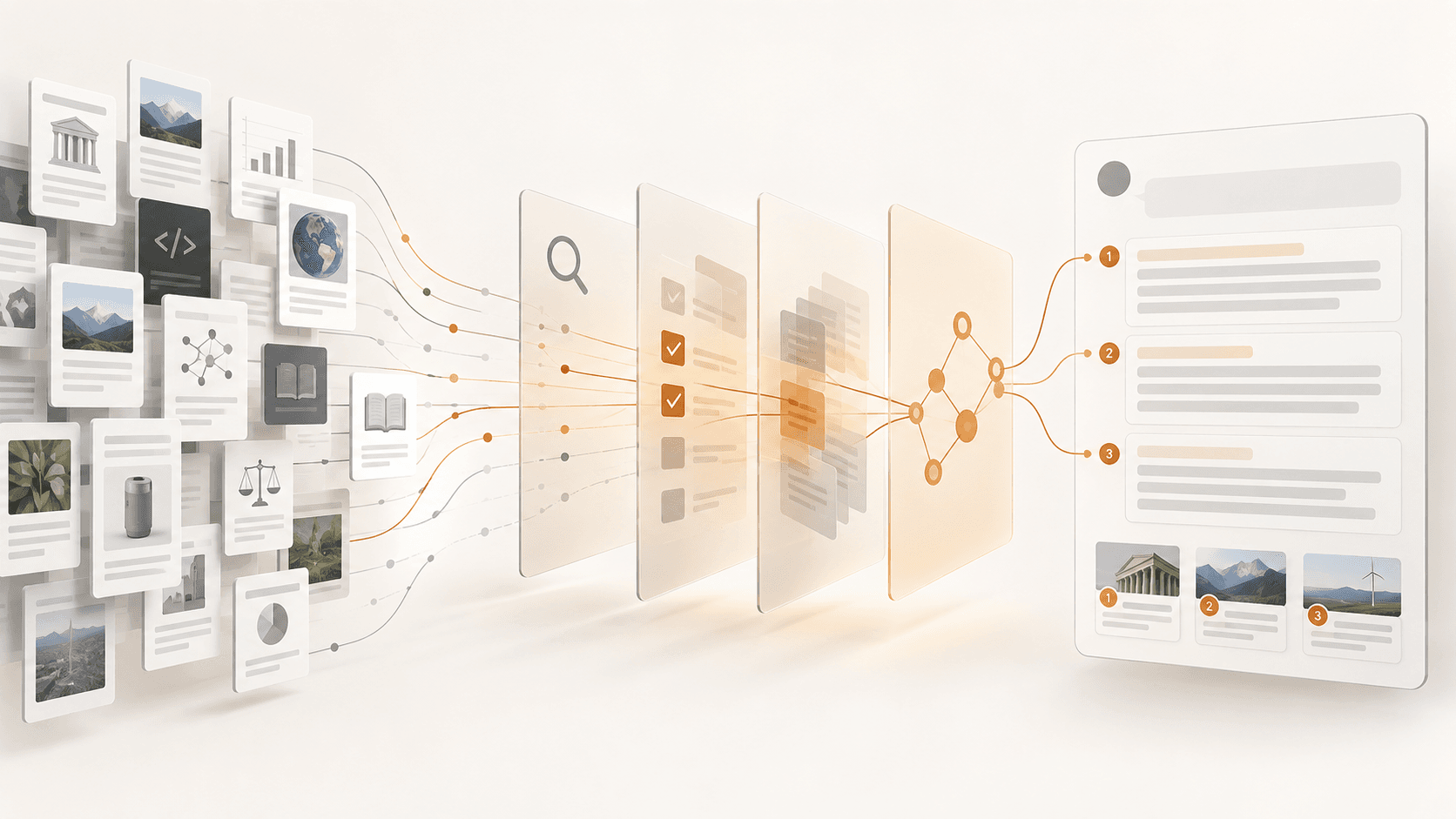
There is no published formula that guarantees your website a citation in Claude.
The practical starting point is access. Anthropic documents three different web agents: Claude-SearchBot supports search, Claude-User handles user-initiated retrieval, and ClaudeBot collects public web content that may contribute to model training. They serve different purposes, so allowing or blocking one does not have the same effect as allowing or blocking another.
Once the relevant access path is open, the harder question is whether your page is useful enough to be selected. It still has to match the question, contain information worth using, and compete with the other sources Claude can retrieve.
A sensible process is:
- Confirm which Claude surface and retrieval path you are dealing with.
- Make the relevant content accessible if you want Claude to use it.
- Focus on questions that matter to real buyers.
- Improve the page that already owns the need, or create one only when something useful is missing.
- Make the page specific, current and verifiable.
- Inspect the owned, competitor and third-party sources Claude surfaces around the same questions.
- Measure repeated observations instead of treating one answer as a permanent rank.
- Choose the action the evidence supports: Create, Improve, Third-party visibility, Monitor, or Skip.
What does “getting cited by Claude” actually mean?
A Claude citation is not the same thing as a brand mention.
When Claude uses web search, Anthropic says it processes web sources and returns its answer with citations and source links. That creates several distinct kinds of visibility.
Brand mention
Claude names your company, product or brand.
Your own website does not have to appear as a source.
Recommendation
Claude presents your company or product as an option, comparison, recommendation or possible solution.
That still does not mean your domain was cited.
Source or citation appearance
A page or domain appears as supporting evidence for the answer.
Referral
Someone follows the source link and visits the website.
Business outcome
That visit contributes to a signup, lead, trial, purchase, subscription or another result that matters.
These outcomes can overlap, but they should not be treated as one metric.
Claude can mention a company while citing an independent publication. It can cite a company's documentation without recommending the company. And a visible citation can produce no referral traffic at all.
For the broader distinction between these outcomes, see Rankvia's guide to AI search visibility.
Claude web search, Research and web fetch are different
Before trying to optimize for Claude, be precise about which Claude experience you mean.
| Surface | Main role | How the web is used | Relevance here |
|---|---|---|---|
| Claude with web search | Answer current or web-dependent questions | Searches live web content and returns citations | Primary |
| Claude Research | Deeper multi-step investigation | Performs multiple searches that build on previous findings | Context |
| Web fetch / direct URL retrieval | Inspect a specific page or document | Retrieves a particular resource | Important distinction |
| Anthropic API web search | Developer-configured web retrieval | Anthropic executes web searches and returns cited results | Technical evidence |
| Anthropic API web fetch | Developer-configured page retrieval | Fetches specified URLs or PDFs | Technical evidence |
| Third-party Claude deployments | Depends on the host application | Retrieval stack can vary | Do not generalize |
Claude does not search the web for every answer
Anthropic says Claude uses web search when it helps answer a question with current information, and users can also explicitly ask Claude to search or not to search.
The API makes the conditional nature of tool use even clearer: Claude decides whether to call available tools based on the request and the tool's purpose.
So if Claude answers a stable question without using the web, your site's absence is not evidence that it lost a citation contest. There may have been no live web-source selection step at all.
Research is a deeper retrieval mode
Claude Research is built for more involved investigations.
Anthropic says Research works agentically, performing multiple searches that build on earlier findings while deciding what to investigate next. Research requires web search and produces answers with citations.
That is different from a straightforward web-search response.
Web search and web fetch solve different problems
Search discovers candidate information.
Web fetch retrieves the full content of a specific page or PDF.
In Anthropic's API, the tools can work together: search can surface relevant pages, then fetch can retrieve a selected source in more depth.
That is useful evidence about Anthropic's developer tools. It is not proof that every Claude.ai conversation follows the same sequence.
API evidence is not automatically claude.ai evidence
Anthropic exposes more implementation detail in its API documentation than in the consumer product.
That makes the API valuable for understanding Claude's retrieval capabilities, but studies run through a configured API environment should remain labeled as API or configured-model evidence.
“Claude API web search behaves this way” is not automatically equivalent to “every consumer Claude response behaves this way.”
ClaudeBot, Claude-SearchBot and Claude-User do different jobs
For publishers, this is the most important technical distinction.
Anthropic currently documents three separate web agents.
| Anthropic agent | Documented role | Why a publisher cares |
|---|---|---|
| ClaudeBot | Collect public web content that could potentially contribute to model training | Training/data-use policy |
| Claude-SearchBot | Navigate and analyze web content to improve search results | Search discoverability |
| Claude-User | Access websites in response to user-initiated requests | User-directed retrieval |
ClaudeBot is the model-development crawler
Anthropic says ClaudeBot collects public web content that could potentially contribute to training its generative AI models.
If a site restricts ClaudeBot, Anthropic treats that as a signal that future material from the site should be excluded from its model-training datasets.
That makes ClaudeBot relevant to your training-use policy.
Anthropic does not describe it as the search-discovery agent.
So the common advice that you must allow ClaudeBot or Claude cannot cite you does not match Anthropic's current three-agent model.
Claude-SearchBot is the search-oriented crawler
Anthropic says Claude-SearchBot navigates the web to improve search-result quality and analyzes content to improve the relevance and accuracy of search responses.
Anthropic also says that disabling it prevents the site's content from being indexed for search optimization and may reduce the site's visibility in user search results.
For publishers interested in Claude search visibility, this is the agent with the clearest documented connection to search discovery.
Allowing it still does not guarantee a citation.
It affects access to a search-related discovery path. It does not create a right to be selected.
Claude-User handles user-directed retrieval
Claude-User serves another purpose.
Anthropic says Claude may access websites using Claude-User when people ask it questions. Disabling it prevents Anthropic from retrieving your content in response to a user query and may reduce visibility for user-directed web search.
That is different from search crawling.
A user may ask Claude to inspect a specific page or work with a particular resource. Claude-User is the access path Anthropic associates with that kind of request.
You can make separate policy decisions
The three-agent model means publishers do not have to think in binary terms such as “allow Anthropic” or “block Anthropic.”
You can make different choices for:
- model-development collection;
- search-oriented crawling;
- user-directed retrieval.
If you want your content available to Claude search but do not want future site material collected for training datasets, Anthropic's current controls let you treat those as separate decisions.
How Claude web retrieval and citations work
Anthropic documents enough of the system to understand the broad retrieval behavior. It does not publish enough to reconstruct a citation-ranking algorithm.
Search is conditional
For consumer Claude, Anthropic says web search is used when it helps answer questions with current information.
That makes certain kinds of queries especially relevant to live retrieval:
- current product information;
- recent news;
- changing prices;
- company information;
- current research;
- recent regulations;
- time-sensitive comparisons.
This is not a guaranteed trigger formula. It is simply consistent with the situations Anthropic says benefit from web search.
Search can be iterative
Research explicitly performs multiple searches that build on earlier results. Anthropic's API web-search tools can also support agentic search workflows rather than reducing every request to one fixed query.
So this traditional search model is too simplistic:
user prompt → one search query → one ranking page → answer
Claude can gather evidence through a more involved retrieval process.
Discovery and source selection are different stages
A page can be accessible and discoverable without appearing as a cited source.
Anthropic documents the access mechanisms and retrieval capabilities.
It does not publish a complete weighting system that explains why one candidate source is selected instead of another.
That distinction should shape every optimization recommendation that follows.
What Anthropic documents - and what remains unknown
| Anthropic documents | Anthropic does not publicly establish |
|---|---|
| Claude can search the live web | A fixed Claude citation algorithm |
| Web-search responses include citations | Citation-factor weights |
| Search is not needed for every response | A fixed search-engine ranking threshold |
Claude-SearchBot supports search discovery | An ideal paragraph length |
Claude-User handles user-directed retrieval | Required author schema |
ClaudeBot serves model-development collection | Required llms.txt |
| Anthropic's documented bots honor robots.txt | A backlink threshold for citations |
| Research performs multiple searches | A universal preference for first-party or third-party sources |
| API web search and web fetch are distinct tools | Identical retrieval behavior across every Claude surface |
The evidence behind any recommendation should be clear.
Anthropic documents it means the behavior is supported by first-party documentation.
Research observes it means a study found a pattern under a particular methodology.
Rankvia recommends it means it is a practical editorial or measurement decision, not an Anthropic ranking factor.
Step 1: Make the relevant content accessible
If you want Claude to retrieve a page, first check that you are not blocking the path you care about.
Review Claude-SearchBot
If Claude search visibility matters, check whether your robots policy allows the search-oriented agent.
Anthropic says blocking Claude-SearchBot prevents its system from indexing the site's content for search optimization and may reduce search visibility.
Review Claude-User separately
If you want Claude to retrieve a page in response to a user's request, review Claude-User as its own policy decision.
Anthropic assigns user-directed retrieval to this agent.
Do not change ClaudeBot solely because you want search visibility
Training collection and search access are separate controls.
A business can reasonably decide:
We do not want future site material collected for model training, but we do want users to find our pages through Claude search.
Anthropic's current agent model lets publishers express that distinction.
Anthropic says its bots honor robots.txt
Anthropic states that its bots honor standard robots.txt “do not crawl” directives. It also supports Crawl-delay.
A restrictive rule for the search agent can use normal robots syntax:
User-agent: Claude-SearchBot
Disallow: /
That is an example of the control, not a recommendation to block the bot.
If you want Claude search discovery, adding that rule would work against that goal.
robots.txt is not the only access problem worth checking
A permissive robots policy only answers one part of accessibility.
Your infrastructure may still interfere through:
- CDN or WAF rules;
- authentication;
- bot challenges;
- CAPTCHAs;
- HTTP failures;
- aggressive rate limits.
Anthropic says its bots respect anti-circumvention technologies rather than trying to bypass them.
So when Claude cannot retrieve a page, check the full request path rather than stopping at robots.txt.
Use Anthropic's current IP list when you need to verify traffic
Anthropic publishes a machine-readable list of crawler source IP prefixes.
If you need to verify crawler traffic in logs or troubleshoot firewall behavior, use Anthropic's current list rather than copying static IP ranges into documentation that may go stale.
Anthropic also recommends using robots.txt to express crawling preferences instead of relying on IP blocking as a persistent opt-out mechanism.
Does Claude use Brave Search?
There is credible public evidence linking Claude web search to Brave.
That does not establish that Brave rankings are a universal Claude citation gate.
What the evidence shows
When Anthropic launched consumer web search in March 2025, reporting identified several clues pointing to Brave, including Brave appearing in Anthropic's subprocessor information, a BraveSearchParams parameter, and observed overlap between Claude citations and Brave results.
That reporting was framed carefully: Anthropic appeared to be using Brave. It was not an Anthropic-confirmed description of Claude's complete search architecture.
Anthropic later documented Brave directly in a separate environment: its Claude for Government Web Search MCP connector sends approved searches to the Brave Search API.
That gives us good reason to treat Brave as relevant to Claude's search history and at least some Anthropic search implementations.
It does not support the stronger claim that commercial Claude always uses Brave and only Brave.
Why the famous 86.7% overlap is not a ranking rule
An early Profound experiment reported an 86.7% overlap between Claude citations and Brave results.
The denominator matters.
That result came from 13 matches out of only 15 results across three queries.
It is useful exploratory evidence.
It is not enough to establish that Claude only cites Brave's top results or that a top-10 Brave ranking guarantees citation eligibility.
If Claude visibility matters to your business, Brave visibility may be worth testing as one variable.
Treat it as evidence to investigate, not as a published Anthropic ranking rule.
Step 2: Target questions worth being cited for
Technical access is only useful when there is a reason for Claude to retrieve your content.
Start with decisions your buyers actually make.
Useful question families often include:
- category discovery;
- product or provider recommendations;
- comparisons;
- alternatives;
- use cases;
- implementation;
- limitations;
- pricing and selection;
- troubleshooting.
Do not build a separate page around every prompt variation.
“Which AI visibility tools are best for SaaS?” and “What software should a SaaS company use to track AI-search visibility?” may represent the same underlying buyer need.
Own the need rather than every wording variation.
For the broader strategy, see Rankvia's guide to AI search optimization.
Pay attention to questions where current information matters
Anthropic positions web search around questions that benefit from current web information.
For citation visibility, that makes changing information particularly relevant:
- current pricing;
- product capabilities;
- company information;
- recent comparisons;
- current research;
- regulations;
- current events.
That does not mean you should manufacture freshness.
It means the user's information need should determine whether live retrieval is likely to matter.
Check page ownership before publishing anything new
For every meaningful visibility gap, ask:
- Is there already a page that should answer this question?
- Does it contain enough information to satisfy the need?
- Would a new URL serve genuinely different intent?
- Does the question have real business value?
- Is the pattern strong enough to justify work?
A missing citation is evidence to investigate.
It is not automatically a content brief.
Step 3: Improve the right page or create something missing
Once you have found an important buyer question, decide whether the site needs a better page or a new one.
Improve when the correct page already exists
An existing page may still be weak evidence because it is:
- incomplete;
- outdated;
- vague;
- unsupported;
- missing important limitations;
- commercially shallow;
- missing useful comparison criteria.
Improve the page that owns the intent instead of creating another URL around slightly different wording.
Create when there is a genuine information gap
A new page is justified when the need itself is not adequately covered.
A product homepage, for example, may not be the right place for a detailed comparison between two products for a specific use case.
If the comparison deserves a substantive answer, a dedicated resource may make sense.
Skip when the opportunity is weak
If the question has little business value, duplicates another page, or appears only as a noisy one-off result, doing nothing may be better than expanding the site.
For the broader decision framework, see Rankvia's guide to improving AI visibility.
Step 4: Make the page useful enough to cite
Anthropic does not publish a rule requiring 40-word answers, 120-word passages or a special Claude article format.
The more useful editorial question is:
Why would this page be strong evidence for this question?
Answer the question without unnecessary friction
If someone lands on a page with a specific problem, the useful answer should not be buried beneath generic industry statistics, a long AI introduction, promotional copy or repeated definitions.
Use headings that reflect the actual questions people need answered.
Give the page information a generic summary cannot replace
A page that repeats the same high-level advice as twenty competitors is easy to substitute.
Depending on the topic, useful source material can include:
- primary documentation;
- original data;
- product specifications;
- current pricing;
- methodology;
- limitations;
- step-by-step procedures;
- firsthand testing;
- meaningful comparisons;
- technical details;
- examples;
- policies;
- operational evidence.
The right evidence depends on the question.
A software buyer needs concrete capabilities, limitations and pricing.
A developer needs requirements and failure cases.
Someone evaluating research needs methodology and provenance.
Make consequential claims traceable
If you publish a statistic, readers should know where it came from.
If you describe a product capability, it should reflect the current product.
If you compare vendors, use criteria a buyer can evaluate.
If you make a technical claim, use primary documentation where it exists.
That does not guarantee a Claude citation.
It makes the page more defensible as a source.
Give commercial pages enough detail for a real decision
Weak commercial copy often says products are powerful, intuitive, scalable or AI-powered.
Those words rarely resolve a buyer's decision.
More useful evidence includes:
- exact functionality;
- what is automated and what is not;
- supported integrations;
- pricing structure;
- constraints;
- implementation requirements;
- relevant limitations;
- who the product is not for.
Keep changing facts current
If a page discusses pricing, product support, software functionality, regulations or recent research, stale details make it weaker evidence.
Update the page when the underlying facts change.
Do not confuse that with a rule that changing the publication date itself improves Claude visibility.
Ignore arbitrary “quotable block” formulas
A clear, self-contained explanation can be useful to readers and easier to understand out of context.
But Anthropic does not publish an ideal passage length for citations.
Advice such as “write every answer in exactly 40-60 words” should be treated as an editorial hypothesis, not a Claude ranking requirement.
Step 5: Understand the sources Claude chooses around you
Your own website is only one part of the source environment.
Claude can surface company-owned and independent sources, and the observable mix can vary substantially by question and category.
There is no proven universal preference for first-party or third-party sources
One 2026 third-party study analyzed 12,595 citation events from configured Claude-family responses across 150 high-intent commercial buying scenarios.
In that dataset, review-oriented sources represented 47.9% of citation events and company-owned sources 37.7%.
The category-level results were more useful than the headline numbers. Independent sources dominated several aging and home-safety categories, while company-owned sources dominated the financial-services cohort.
The study explicitly says its findings do not reveal Anthropic's proprietary retrieval or source-selection logic and should not be generalized to every Claude interaction.
Because it measured configured Claude-family responses rather than ordinary consumer Claude searches, it should be treated as evidence about observed outputs under that methodology, not as a map of claude.ai.
The useful takeaway is narrow:
The source environment can change with the market and buyer question.
That is much more defensible than saying Claude simply “prefers reviews” or “prefers brand sites.”
Separate owned, competitor and third-party sources
Classify what Claude surfaces before deciding what to do.
Owned source A page on your domain.
Competitor-owned source A page controlled by a competing company.
Third-party source An independent review site, publication, community, government source, directory, marketplace or other external domain.
This changes the diagnosis.
If competing companies' own documentation repeatedly appears, your owned content may deserve attention.
If independent review sites dominate the evidence around the question, another generic product page may not address the actual source pattern.
For a deeper framework, see Rankvia's guide to AI search source analysis.
Third-party visibility should be earned legitimately
A recurring third-party source may reveal a genuine distribution opportunity:
- accurate editorial coverage;
- independent reviews;
- inclusion in a relevant marketplace or directory;
- original research worth referencing;
- useful expert contributions;
- authentic customer discussion.
That is different from manufacturing reviews, seeding fake forum posts or trying to manipulate citations.
The goal is to understand the evidence environment Claude is using, then improve your legitimate presence within it.
Step 6: Measure Claude mentions, citations and referrals separately
Claude does not give websites a fixed public ranking position comparable to a traditional SERP.
Measure observations instead.
One response is not a permanent Claude rank
Avoid language such as:
We rank #2 in Claude.
Prefer a statement with a defined denominator:
Our domain was cited for 8 of 25 monitored Claude questions during this observation period.
That describes what was actually observed.
Separate brand visibility from source visibility
A useful Claude measurement record can include:
- buyer question;
- Claude surface;
- whether web search was used where observable;
- brand appearance;
- competitor appearances;
- source domain;
- exact cited URL;
- observation date.
Brand appearance asks:
Did Claude show the brand?
Source appearance asks:
Did Claude use the domain or page as visible evidence?
Those are different outcomes.
Separate citations from referral traffic
A visible source link does not mean anyone clicked it.
Where referral attribution is available, traffic should be measured separately from source appearances.
Citation count is not traffic. Traffic is not conversion. Conversion is not revenue until it is actually measured.
Use a stable set of meaningful questions
Repeated measurement is more useful when the question set remains stable enough for scan-to-scan comparisons.
Focus on questions tied to discovery, evaluation and purchase decisions rather than maximizing prompt volume.
For the wider methodology, see Rankvia's guides to AI citation tracking and AI visibility measurement.
If your site never appears in Claude, troubleshoot in this order
Do not start by writing another article.
1. Confirm that Claude actually used the web
If Claude answered without web search, the absence of your site was not a failed web-citation attempt.
2. Confirm the surface
Was the observation from:
- regular Claude with web search;
- Research;
- API web search;
- web fetch or a direct URL?
Do not combine them into one measurement series.
3. Check Claude-SearchBot
For search discovery, confirm that the search-oriented agent is not unintentionally blocked.
Anthropic says blocking it can reduce visibility in search results.
4. Check Claude-User
For user-directed retrieval, inspect the Claude-User policy separately.
Anthropic says blocking it prevents retrieval of the site's content in response to user requests.
5. Check actual HTTP accessibility
Review server and security logs where practical.
Look for:
- blocked requests;
- WAF challenges;
- CAPTCHAs;
- authentication barriers;
- HTTP failures;
- aggressive rate limits.
A robots policy can permit access while the request still fails elsewhere in the stack.
6. Inspect what Claude surfaced instead
This is often more informative than your absence.
Did Claude cite:
- a competitor;
- official documentation;
- a review site;
- a government source;
- an industry publication;
- a marketplace;
- another reference source?
Those sources tell you something about the evidence environment around the question.
7. Decide where the gap belongs
If the right owned page exists but is weak, improve it.
If a valuable information need has no owner, create something useful.
If the visible source environment is mainly external, investigate a legitimate third-party visibility opportunity.
If the signal is uncertain, monitor it.
If the question has little business value, skip it.
8. Repeat the observation
One answer can reveal something worth investigating.
A recurring pattern is stronger evidence for a business decision.
APPLY THIS TO YOUR WEBSITE
See where your brand appears across AI search
Rankvia checks buyer-relevant questions across ChatGPT, Gemini and Google AI, then shows where your brand appears, which competitors show up, and which sources influence the answers.
Claude is not currently included in Rankvia's tracked providers.
Free preview · No credit card required
Claude SEO tactics to be skeptical of
Claude-specific optimization advice has expanded faster than Anthropic's public documentation.
Several claims deserve scrutiny.
“ClaudeBot must crawl you or Claude won't cite you”
Anthropic describes ClaudeBot as the agent associated with collecting public web content that may contribute to model training.
It assigns search-oriented crawling to Claude-SearchBot and user-directed retrieval to Claude-User.
Blocking ClaudeBot and blocking Claude search are not the same decision.
“Rank in Brave's top 10 and Claude will cite you”
There is credible evidence linking Brave to Claude web search, particularly around the feature's 2025 launch.
There is no current Anthropic rule saying a particular Brave ranking position guarantees citation.
The widely repeated 86.7% overlap result came from only 15 results across three queries.
Brave visibility can be worth investigating. It should not be treated as a proven citation gate.
“Claude only uses Brave”
The public evidence does not justify that universal statement.
Anthropic confirms Brave for its Government Web Search MCP connector. Commercial Claude uses a built-in search capability whose complete provider architecture Anthropic does not publicly define in the same way.
“Write every answer in 40-60 words”
Anthropic does not publish a required passage length for Claude search citations.
Clear, focused passages are good writing.
The exact number is not an established ranking rule.
“Add author schema to get cited”
Anthropic's public crawler and search documentation does not identify author schema as a Claude citation requirement.
Use structured data where it serves a legitimate purpose, not because somebody has labelled it a Claude ranking factor.
“Create an llms.txt file to get into Claude”
Anthropic's current crawler and web-search documentation does not establish llms.txt as a requirement for Claude citations.
Maintain one if another product or workflow needs it. Do not present it as a confirmed Claude visibility lever without evidence.
“Build backlinks to increase your Claude rank”
Backlinks can matter to traditional search engines and other discovery systems.
Anthropic does not publish backlinks or domain authority as Claude citation factors.
“One citation means the optimization worked”
One citation is one observation.
It becomes more useful when the buyer question matters, the source relationship makes sense, the appearance recurs, and the result contributes to measurable traffic or business outcomes.
Claude citation checklist
Access
Claude-SearchBotpolicy reviewed.Claude-Userpolicy reviewed separately.ClaudeBottreated as a separate training-use decision.- robots.txt checked.
- server, CDN and WAF accessibility checked where relevant.
- no unintended authentication or bot challenge blocks useful retrieval.
Opportunity
- The question matters to real buyers.
- The underlying intent is clear.
- Existing page ownership has been checked.
- A new page would serve a distinct need rather than another prompt variation.
Page usefulness
- The main question is answered clearly.
- Important claims are verifiable.
- The page contains specific information beyond generic summaries.
- Commercial details are concrete when they affect the decision.
- Limitations are visible.
- Time-sensitive facts are current.
Source ecosystem
- Owned sources are identified.
- Competitor-owned sources are separated.
- Third-party sources are classified.
- Recurring source patterns are investigated before action.
- Legitimate off-site opportunities are considered.
Measurement
- Claude surface is recorded.
- Whether web search occurred is understood where observable.
- Brand appearances are separated from citations.
- Citations are separated from referral traffic.
- Repeated observations are collected.
- One response is not treated as a permanent rank.
Treat Claude citations as evidence, not a ranking to reverse-engineer
Anthropic gives publishers a useful starting point because it documents distinct paths for model-development crawling, search crawling and user-directed retrieval.
That lets you make informed access decisions before touching the content.
After that, certainty drops.
Anthropic does not publish a formula explaining why one candidate page wins a citation and another does not.
That is where observation becomes more useful than folklore.
Look at the buyer question. Confirm whether live web retrieval was involved. Inspect the sources Claude selected. Assess the page you already own. Look at the external evidence environment.
Then decide whether the gap calls for better owned content, a new resource, legitimate third-party visibility, more observation, or no action at all.
The useful question is not:
What secret factor makes Claude rank me?
It is:
Why might Claude be surfacing these sources for this question, and is there a worthwhile action we can take?
Frequently asked questions
Does Claude cite sources?
Yes, when Claude uses web search. Anthropic says web-search responses include direct citations and source links so users can inspect the underlying material.
That does not mean every Claude response contains web citations, because Claude does not search the web for every request.
Does Claude always search the web?
No.
Anthropic says Claude searches when web information helps, and users can explicitly ask it to search or not to search.
If no web retrieval occurs, the absence of your website should not be treated as a failed citation attempt.
What is Claude-SearchBot?
Claude-SearchBot is Anthropic's search-oriented web agent.
Anthropic says it navigates and analyzes web content to improve search-result relevance and accuracy. Blocking it can prevent the site's content from being indexed for search optimization and may reduce search visibility.
What is Claude-User?
Claude-User is Anthropic's user-directed retrieval agent.
Anthropic says Claude may use it to access websites in response to user requests. Blocking it can prevent the site's content from being retrieved for those requests.
What is ClaudeBot?
ClaudeBot is Anthropic's model-development crawler.
Anthropic says it collects public web content that could potentially contribute to future model-training datasets.
It should not be confused with Claude-SearchBot.
Does blocking ClaudeBot stop Claude from citing my website?
Anthropic does not document ClaudeBot as its search crawler.
Search-oriented crawling is assigned to Claude-SearchBot, while Claude-User covers user-directed retrieval.
Blocking ClaudeBot is therefore a different policy decision from blocking those search and retrieval agents.
Does Claude use Brave Search?
There is credible evidence that Brave has been involved in Claude web search, particularly around the launch of the feature in 2025. Anthropic also confirms Brave Search usage for a separate Claude for Government search connector.
Anthropic's current commercial-Claude documentation does not establish Brave as the sole provider for every Claude search or make Brave rankings a universal citation requirement.
Do I need to rank in Brave to get cited by Claude?
No published Anthropic rule requires a particular Brave ranking.
Early third-party research found substantial overlap between Claude citations and Brave results, but the widely repeated experiment involved only 15 results across three queries.
Brave visibility may be worth investigating. It is not a guaranteed citation threshold.
Does schema or llms.txt help with Claude citations?
Anthropic's current crawler and web-search documentation does not identify special structured data, author schema or llms.txt as requirements for Claude search citations.
Use those technologies where they serve another legitimate purpose, but do not treat them as confirmed Claude ranking factors.
Can you guarantee that Claude will cite a website?
No.
You can make the relevant access paths available, improve the usefulness and verifiability of your pages, strengthen legitimate third-party visibility and measure recurring source appearances.
None of those actions guarantees that Claude will select a particular page for a future answer.
See where your brand appears across AI search
APPLY THIS TO YOUR WEBSITE
Turn AI visibility gaps into the right next action
Rankvia does more than show where your brand is missing. It combines AI visibility evidence with your website, competitors, search opportunities and existing content to decide whether a gap should become Create, Improve, Monitor, Third-party visibility, or Skip. Rankvia currently tracks ChatGPT, Gemini and Google AI.
Claude is not currently included in Rankvia's tracked providers.
Sources
- Anthropic - Claude web search
Anthropic's documentation for Claude web search and citations.
- Anthropic - Web crawler documentation
ClaudeBot, Claude-SearchBot, and Claude-User purposes and robots controls.
- Anthropic - Web search tool
API web search behavior and cited results.
- Anthropic - Web fetch tool
API web fetch behavior for specified pages and PDFs.
Related guides
AI Citation Tracking: How to Track Sources Across ChatGPT & AI Search
Track AI source visibility by buyer question, provider, domain, and exact URL, then interpret recurring citation patterns correctly.
AI Search Source Analysis: How to Find Meaningful Source Gaps
Classify recurring AI-search sources, compare owned, competitor, and third-party evidence, and find the gaps worth investigating.
How to Track AI Visibility: A Practical Measurement Framework
Build a comparable AI visibility tracking system with buyer questions, recurring scans, evidence, reporting, and next actions.
How to Improve AI Visibility: A Practical Action Framework
Diagnose AI visibility gaps, choose the right response, and improve access, owned pages, evidence, or third-party presence without chasing prompts.
How to Get Cited by Gemini: What Actually Matters in 2026
Understand Google's documented Gemini grounding paths, source behavior, publisher controls, and a practical evidence-led workflow.